
|

Dental Sealants

Prevent cavities before they start with dental sealants

Finch Midland Dental in Scarborough offers dental sealants — a painless, non-invasive coating that reduces cavity risk on molars by up to 80%. Applied in minutes with no drilling or anesthesia, sealants protect the deep grooves and pits where brushing alone cannot reach. our team recommends sealants for children as soon as permanent molars erupt and for adults with cavity-prone teeth. Schedule your visit or call (416) 297-6109.
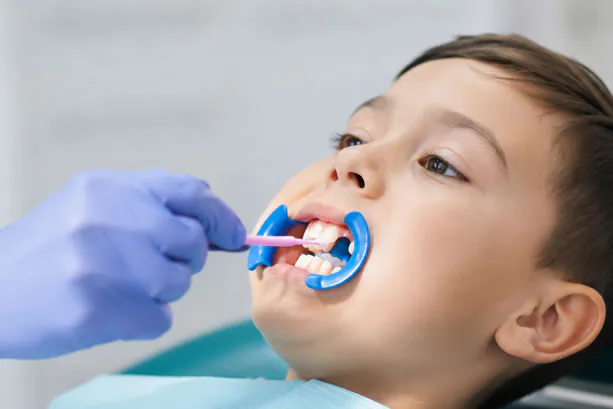
Dental sealant applied to teeth
Preventative Care

What Are Dental Sealants?

Dental sealants are a preventive dental treatment designed to protect the chewing surfaces of your teeth from decay. They are a thin, plastic coating that is painted onto the grooves and pits of your teeth, forming a protective barrier against harmful bacteria and acids that can cause cavities.

Sealants are most commonly used on the molars and premolars, which are the teeth at the back of the mouth that are used for chewing. By providing an extra layer of protection, dental sealants can help to reduce the risk of tooth decay and the need for more extensive dental treatment in the future. If you're looking to maintain good oral health and prevent cavities, dental sealants may be a smart choice for you.

Our Clinical Approach

Before applying sealants, we examine each tooth individually. If a groove already shows early signs of decay, we address that first — sealants are placed only on healthy, intact enamel. We use BPA-free resin materials and verify the seal on each tooth with a bite check before the patient leaves.

At each follow-up visit, we inspect existing sealants for wear or chipping and reapply if needed — ensuring continuous protection without gaps.

Reviewed by our team · Finch Midland Dental, Scarborough

Transcript
this video will show us the procedure of placing a dental sealant on a tooth so the first thing that you are seeing that is happening right now is pumice is being applied to the surface of the tooth to help clean it off then after the pumice is applied to the tooth they will rinse it off with water to properly place sealants the area needs to be super super dry so gauze cotton rolls and or dry angles will be placed around the tooth to help keep the area free of saliva after the area around the tooth is super super dry and we know that there will be no saliva contamination we start the first thing we use is a blue material called etch it's applied to the grooves and it's left on there for about 20 to 30 seconds so we kind of just we're waiting 20 to 30 seconds maybe you'll tell a joke during this time you don't want the patient to close though you need to stay open so we're just waiting we're waiting we're waiting and then finally when it's time to rinse we get suctions in there oh almost done all right now it's time get the suctions in there and then we rinse with copious amounts of water and make sure that it's removed we want no more blue on that tooth so after it's all rinsed away then the tooth is dried off with the air the tooth now will have a chalky white appearance so it's nice and dull looking and ready for the sealant material to be placed this is the sealant material now being placed into the major grooves of the tooth so we're just going to kind of watch that sealant material kind of get placed there you go and then after that the clinician may take a micro brush to soak up any excess and or the clinician may take an explorer to make sure everything looks good before we light cure the sealant material onto the tooth again still making sure there is no saliva contamination throughout this whole process because the tooth needs to stay dry for the sealant to properly be placed now the tooth is being light cured with the blue light so we wait after the tooth is cured with the blue light the last thing they're going to do is check the margins of the sealant and make sure it's nice and sealed so they're checking the margins with the explorer again and then they may check the bite with articulation paper so they'll remove the cotton rolls so the patient can properly bite down if there are no adjustments to be made if everything looks good the clinician will simply evaluate the sealant one last time and you're done i hope you enjoyed this video please like and subscribe if you did if you want more teeth talk you can visit my website teethtalkgirl.com where we have more articles and videos on specific dental topics and until next time peace you
The Procedure

What to Expect During a Dental Sealant Application

Cleaning: First, your dentist will clean the teeth that will receive the sealants. This ensures that no debris or bacteria are present on the tooth surface, allowing the sealant to bond properly.

Drying: Once the teeth are clean, your dentist will use an air compressor or other drying tool to ensure that the tooth surface is completely dry. Moisture can interfere with the bonding process, so this step is crucial.

Etching: Next, your dentist will apply a mild acid solution to the tooth surface. This etches the surface of the tooth, creating a rough surface that helps the sealant bond to the tooth.

Application: Once the tooth surface is prepared, your dentist will apply the sealant to the grooves and fissures of the tooth using a small brush. The sealant is a liquid resin that hardens quickly once applied.

Curing: Finally, your dentist will use a special light to cure or harden the sealant. The light activates the resin, causing it to harden and form a protective barrier on the tooth surface.

The entire process typically takes only a few minutes per tooth and is painless. With proper care, dental sealants can last for several years, providing long-lasting protection against tooth decay.

Why Sealants Matter

What Are the Benefits of Dental Sealants?

Dental sealants are a highly effective preventative measure that offer several benefits to individuals of all ages:

Cavity Prevention

Sealants reduce the risk of decay in the permanent molars by up to 80%, making them one of the most effective preventative treatments available for children.

Painless Application

No drilling, no shots, no discomfort. The entire sealant application process takes only a few minutes per tooth and is completely non-invasive.

Long-Lasting Protection

When properly applied and maintained, dental sealants can protect teeth from decay for up to 10 years — with routine monitoring at each checkup.

Cost-Effective

The CDC estimates that for every dollar spent on sealants, $8–$38 can be saved in future dental treatment costs by preventing fillings, crowns, and root canals.

Safe and Proven

Dental sealants have been recommended by the ADA and CDC for decades. They are safe for patients of all ages and have an extensive track record of clinical effectiveness.

One quick appointment can protect your child's teeth for up to 10 years. Dental sealants at Finch Midland Dental are a smart, pain-free investment in your family's oral health — ask us at your next visit whether sealants are right for your child or for you.
Transcript
what are dental sealants are they worth it are they safe should i have them put on my kids teeth hi everyone my name is whitney and i'm a dental hygienist here to talk about dental sealants first of all what are they sealants are basically thin plastic coatings that your dental hygienist or your dentist applies into the deep grooves and pits on the chewing surfaces of your molars your back teeth this sealant barrier helps prevent acids and bacteria from seeping into narrow areas that a toothbrush can't reach which reduces you or your child's chance of getting cavities so that's great it's an elective preventative treatment so if you're prone to cavities or have really deep pits and grooves in the chewing surfaces of your molars you can really benefit from sealants since they reduce your chance of tooth decay so it is basically just a filling no sealants are not fillings unlike getting a filling there's no drilling or numbing with sealants and another thing with fillings you get them because your tooth is unhealthy but with sealants you get them because the tooth is healthy and we want to protect them so they continue staying healthy when you get a sealant placed you don't feel anything like i said you don't need to be numb nothing like that i tell my kiddo patients that i'm literally just painting stuff on their teeth the only hard part about the procedure is that everything needs to stay dry which in the mouth can sometimes be a challenge so we use lots of cotton rolls and gauze to help keep the saliva away from when the ceiling is being placed but other than that it's a super easy straightforward procedure that takes a few minutes for each tooth the process is way easier than most people expect which is great because most of the time sealants are placed on kids i do have a video showing a sealant being placed which i will link in the description if you're interested in watching the procedure okay that makes sense but if sealants are so great at protecting teeth why don't they seal all of our teeth how come you only do the molars so the sealant material only sticks to the grooves and pits of teeth it won't stick to smooth surfaces the molars have grooves and pits and all the other teeth are smooth so it literally wouldn't stick also the areas that are most prone to decay are the molars in general because of how far back they are as well as their groovy surfaces okay cool i get that but really are we sure that they are safe to be putting in our mouths sealants are absolutely safe the sealant itself is made out of a bpa free material even if a sealant were to fall off and you were to accidentally swallow it you probably wouldn't even realize it and it would not make you sick because all of the materials are ada and fda approved got it all right well last questions you've got to tell me how much they cost and how long they last dental sealants usually cost about thirty dollars to sixty dollars per tooth but that can vary significantly depending on the dental office's location also since sealants lower your chances of tooth decay most insurances actually cover them at a hundred percent up to around age 14. but again if you're paying out of pocket they cost way less than a filling would cost which is usually over 200 dollars per tooth the best time to get dental sealants is when a child's first and second set of permanent adult molars erupt so the first molars around age six and for the second molars around age twelve give or take a year or two for both but regardless once those teeth are totally erupted and are visible sealants can be placed and these sealants can last for several years i've had patients in their 30s who still have sealants present on their teeth from age 6. awesome thanks for this and if i wanted even more information on sealants where could i find it if you want more information i'll of course link my sealant procedure video that i mentioned earlier in the description box as well as my website teetsuckgirl.com which has articles and videos all about healthy mouths and healthy teeth i hope this video helped you please like and subscribe and turn on the notifications if it did and if you want even more teeth talk you can hang out with me on instagram at teeth talk girl and until next time peace love and teeth [Music] you
Is It Right for You?

Who Is the Ideal Candidate for Dental Sealants?

  • Children and teenagers: The American Dental Association recommends that children and teenagers receive dental sealants as soon as their permanent molars come in, typically around ages 6 and 12.
  • Individuals with deep grooves or fissures: Teeth with deep grooves and fissures are more prone to decay, as food particles and bacteria can get trapped in these areas.
  • Individuals with a history of cavities: If you have a history of cavities, sealants can provide an extra layer of protection, reducing the likelihood of future cavities.
  • Individuals with orthodontic appliances: Braces and other orthodontic appliances can make it more difficult to properly clean teeth, increasing the risk of decay.
  • Adults with healthy teeth: While often associated with children, adults with healthy teeth can also benefit from this preventative measure.
Dental sealant statistics and research data
The Data

What Are the Statistics on Dental Sealants?

  • Reduced risk of decay: According to the CDC, dental sealants can reduce the risk of cavities in the permanent molars by up to 80%. In children aged 6–11, sealants can reduce decay risk by almost 40%.
  • Cost-effective: The CDC estimates that for every dollar spent on dental sealants, between $8 and $38 can be saved in future dental treatment costs.
  • Long-lasting protection: When applied and maintained properly, dental sealants can provide protection against decay for up to 10 years.
  • Wide-reaching impact: According to the American Dental Association, sealants can reduce the incidence of cavities by up to 80% in both children and adults.
Step By Step

What to Expect During Your Sealant Appointment

The entire appointment takes about 15–30 minutes depending on how many teeth are sealed. Here is the process step by step:

  1. 1. Tooth cleaning. Each tooth is thoroughly cleaned and dried. No drilling is involved — just a gentle polish to remove any debris.
  2. 2. Acid etch. A mild etching solution is applied for a few seconds to roughen the tooth surface. This helps the sealant material bond securely. The etch is then rinsed off and the tooth is dried again.
  3. 3. Sealant application. The liquid resin is painted into the grooves and pits of the tooth using a small brush. It flows into all the crevices that are difficult to clean with a toothbrush.
  4. 4. Curing light. A special UV light is held over the tooth for 20–30 seconds, hardening the sealant into a durable protective shield.
  5. 5. Bite check. our team or the hygienist checks your bite to ensure the sealant feels natural and isn't too thick. Any excess is smoothed away.
Common Concerns

Common Concerns About Dental Sealants

Parents and patients often have these questions before choosing sealants. our team addresses each one at your visit.

"Are dental sealants safe? What about BPA?"

Dental sealants have been recommended by the ADA, CDC, and American Academy of Pediatric Dentistry for decades. While some sealant materials contain trace amounts of BPA, the exposure is extremely low — less than what you'd get from handling a receipt or breathing dust. At Finch Midland Dental, we use BPA-free sealant materials for additional peace of mind.

"Can adults get dental sealants, or are they just for kids?"

Adults absolutely can benefit from sealants. If you have deep grooves on your molars, a history of cavities, or teeth that haven't yet developed decay, sealants provide the same protective benefit for adults as they do for children.

"What if a sealant falls off or chips?"

Sealants are checked at every routine visit. If one has worn or chipped, we can reapply it in minutes — the same quick, painless process as the original application. A partial sealant still provides some protection, but reapplication ensures the full barrier is restored.

What to Know

Risks and Considerations of Dental Sealants

Dental sealants are one of the lowest-risk procedures in dentistry. However, informed patients make better decisions:

  • Sealants can only be placed on healthy enamel — if decay is already present, it must be treated first
  • Sealants may chip or wear over time and need periodic reapplication (checked at every visit)
  • In rare cases, a sealant may trap bacteria under the coating if applied over undetected early decay — this is why our team examines each tooth before application
  • Sealants protect only the chewing surfaces — daily brushing and flossing remain essential for the smooth surfaces and spaces between teeth
Common Questions

Frequently Asked Questions About Dental Sealants

Dental sealants are made of a plastic-like material called resin. The resin flows into the grooves and pits of the tooth and hardens under a curing light to form a smooth, protective shield.

When applied and maintained properly, dental sealants can last up to 10 years. They are checked at every routine visit and can be reapplied quickly if any wear is detected.

No, dental sealants are painless and do not require any numbing or anesthesia. The application involves cleaning, painting, and light-curing — no drilling at any point.

Dental sealants are typically used on the molars and premolars, which are more prone to decay due to their deep grooves and fissures. They are not usually placed on front teeth, which have smoother surfaces.

Yes. At our Scarborough dental office we offer dental sealants to patients from Scarborough and the surrounding area. Contact our office today to schedule an appointment.

Most dental insurance plans cover sealants for children under 14–18, depending on the plan. Coverage for adults varies. We verify your benefits before your visit and will let you know your coverage and any out-of-pocket cost.

The ADA recommends sealants as soon as the first permanent molars erupt — typically around age 6 for the first molars and age 12 for the second molars. Sealing these teeth early provides the most protection during the cavity-prone years.

No. Sealants are a preventative treatment and should only be placed on healthy enamel. If decay is already present, our team will treat the cavity first. Sealants can then be placed on the remaining healthy teeth to prevent further decay.

Medical Disclaimer

This content is for informational purposes only and does not constitute dental or medical advice, diagnosis, or treatment. Dental sealants are a preventative measure and are not a substitute for daily brushing, flossing, and regular dental visits. Sealants may need periodic reapplication. Consult our team or a qualified dental professional regarding any questions about your oral health. Individual results may vary.

Protect Your Teeth with Dental Sealants

Contact our office to learn how dental sealants can help prevent cavities and keep your smile healthy.