
|

Pediatric Dentistry Scarborough

A lifetime of healthy smiles starts here

Finch Midland Dental in Scarborough provides gentle, comprehensive dental care for children of all ages — from first visits through adolescence. our team and our team create positive dental experiences that build healthy habits for life, offering preventive cleanings, sealants, fluoride treatments, and restorative care in a warm, child-friendly environment. Schedule your child's visit or call (416) 297-6109.

Happy man smiling in dental chair during family dentistry visit
Children's Dental Care

What Is Pediatric Dentistry?

Pediatric dentistry is a specialized field of dentistry that focuses on the oral health care needs of children and adolescents. It involves providing preventative and therapeutic dental care to infants, children, and teenagers, as well as those with special health care needs. Pediatric dentists have completed additional training beyond the four years of dental school, with an emphasis on child psychology, growth, and development.

The goal of pediatric dentistry is to promote healthy oral habits from a young age and prevent dental problems before they occur. This includes regular check-ups, cleanings, and treatments such as fluoride applications, sealants, and cavity fillings. Pediatric dentists also play an important role in educating children and their families about proper oral hygiene and diet.

Our Clinical Approach

At Finch Midland Dental, we use a "tell-show-do" approach with every young patient. Before any instrument touches a child's mouth, we explain what we're going to do in age-appropriate language, show them the tools, and let them ask questions. This builds trust and reduces anxiety — turning dental visits into positive experiences rather than something to fear.

For children with special needs, sensory sensitivities, or significant dental anxiety, we adjust our approach — including appointment timing, sensory accommodations, and sedation options when appropriate.

Reviewed by our team · Finch Midland Dental, Scarborough

Woman smiling in dental chair during dental appointment
Specialized Care

Comprehensive Care for Every Child

In addition to providing preventative and therapeutic dental care, pediatric dentists also offer specialized services for children with special health care needs. These may include children with physical, emotional, developmental, or cognitive disabilities that require additional support during dental visits.

Pediatric dentistry is an essential field of dentistry that focuses on providing comprehensive dental care to children and adolescents. With a focus on prevention, education, and specialized care for children with special health care needs, pediatric dentists play an important role in promoting healthy oral habits and ensuring that children maintain good oral health throughout their lives.
Transcript
welcome to what to expect at your child's dental cleaning a child in the dental world is considered a child until age 14 this video is intended to show an overview on what is really happening during a kid's dental appointment first we'll call the patient back we'll check with the parent or guardian and ask if there's any changes in the patient's health history and or if there are any dental concerns once the child is seated we ask how school is or how their summer is going we try to make them feel comfortable and talk about something new and exciting that may be going on in their life then we will check and see if the patient requires any x-rays today if the patient does require x-rays we start by placing a lead shield with a thoracic color on them I personally like to try and make x-rays fun and I like to joke with kids that I'm taking photos of their teeth with all this funniest looking camera ever that's my go-to joke and it usually works we use a small sensor for kids as you could see the difference between the big size to adult sensor in the small size one child sensor it's much much smaller and more comfortably fitting for a small mouth generally the first time we take check-up x-rays bitewing x-rays is around age five or when the first adult molars erupt my awesome model patient in this video ella is 11 years old and today she is due for a bitewing x-rays bitewing x-rays are indicated routinely once a year but each patient has a different x-ray frequency and is evaluated based on an individual basis and each case and carries risk situation is different again Here I am trying to make jokes and distract against any discomfort that may be happening because I know they have small little mouths and it's hard to bite down even if you're an adult comedy is my go-to in every situation I try to make it fun I like everyone to have fun and I like everyone to smile because that's what your teeth are all about smiling so next we're Ian the patient back in our rollercoaster chair we count the teeth and mark which teeth are existing on the chart like I said Ella here is 11 years old and she is in the heart of the mixed dentition stage lots of adult teeth lots of baby teeth and lots of missing teeth another question I like to ask kids is if they have noticed any current Wiggly teeth it's always fun to hear their stories about how they've lost teeth and how they get prizes at school for losing teeth it's funny all the stories they have so now to count the teeth we use a mirror and an instrument called an explorer aka the tooth counter and once everything is in the chart we start cleaning the teeth but we have to make sure everything is marked existing or missing in the chart so we know you know what kind of teeth were working with there's a lot of baby teeth there's a lot of adult teeth there's a lot of missing teeth at this stage in life next now each office may be different I know some prefer to polish first and then scale but I personally usually scale first and then polish depending on the age and plaque and tartar buildup we may scale with hand instruments but if the child is very young three or four years old or no plaque is observed sometimes I'll just use the Explorer it gave the tooth counter and sometimes this step is not required at all so it's kind of case-by-case but if we are scaling with hand instruments generally we will use the mirror again and we will occasionally wipe the plaque off the instrument onto a gauze pad so we scale scale scale and make the teeth super smooth free of any plaque bugs oftentimes the light is way too bright and gets in everyone's eyes so if the office doesn't provide sunglasses feel free to bring your own and wear them so you won't have to have the bright sunshine in your eyes and now you have a nice comfortable cleaning you get to sit back and relax like you're at the dental spa so after scaling all the surfaces of all the teeth may I note how nice these camera shots are rahid oh so time for mr. thirsty sorry I was distracted by look at how good these shots are okay time for mr. thirsty our suction he drinks up all the water we use to rinse off the plaque bugs so mr. Darcy's often times a hit sometimes a little loud and scary but we try to make him fun cuz he's thirsty and he's funny so watch him here drinking away the water this one's really cool because you can actually it's kind of clear so you can see the water suctioning through mr. thirsty sometimes you can't really see what's going on but here you can see it now we're just gonna show us kind of finishing up we did all the front teeth the anteriors now we're gonna scale all the back teeth posteriors and after everything is scaled and rinsed and clean we will polish here I'm asking Ella which flavor of Polish she would like currently our choices are cotton candy or blue raspberry or mint and she chose blue raspberry you can see the fabulous blue raspberry here we're using a prophy angle aka mr. superhero toothbrush he spins and cleans your teeth like a superhero would he dips into the blue raspberry and then he superhero Li cleans your teeth how many words can we use adjective adverb superhero superhero superhero look at that blue sometimes I like to joke that they're Smurfs teeth did you just kiss a smurf but I don't know I'm always trying to make jokes sometimes they're funny sometimes they're not mr. thirsty is drinking up the blue now he wanted to taste up the blue and that's just how it goes we're rinsing and then we're polishing and then we're rinsing and then we're polishing and we just keep repeating that until all of the teeth are clean polished and then at the end we do a really great rinse rinse everything away and then we floss after we floss I use the air which is the same water instrument but it's the other little button we like to blow the air on the teeth and that confirms that we didn't miss any spots so there's no plaque bugs hanging out when you blow the air on the teeth it dries the tooth so you can clearly see if there's any residual plaque left over it's kind of like our double check and then if there is anything we'll go back and remove it we'll do an oral cancer screening we check the sides of the tongue we check the roof of the mouth the back of the mouth all around the mouth make sure everything looks healthy and then we might go over some oral hygiene instructions at home care while we're waiting for the dentist to come in and do the exam we also try to go over all the stuff we're giving you in your goodie bag so you know how to use it when you're at home then once the dentist comes in the dentist will so say hi chat a little see how they're doing same thing same greeting that the hygienist rested and then the dentist will specifically check for any cavities and if there's anything concerning in the mouth first super young kids the real little ones it's easy to just say the dentist is going to recount your teeth and make sure that we counted right you know things like that so we try to make it super fun we want to be fun so then after the dentist does the exam we will do the fluoride there are two types of fluoride in most offices you can usually pick or maybe they only have one or the other or maybe they recommend one over the other right here you see us demonstrating a fluoride foam treatment the foam fluoride is placed in these trays which is placed in the mouth and it usually takes between one and four minutes after it is removed you have to wait 30 minutes to eat or drink anything the good thing is that your teeth will still feel super smooth here we are demonstrating fluoride varnish treatment I usually recommend this one because it has a little more fluoride concentration in it and the benefits may last a little longer plus there is no gagging to worry about because we are just painting the teeth super simple and you don't have to deal with that large foam piece in your mouth the other good thing about varnish is that you can eat and drink right away we just ask you do not eat anything sticky for six hours the one thing about this one that people sometimes don't love is that the teeth feels sticky for a little bit but I personally think it is worth it a little more fluoride a lot more cavity protection benefits again for the little kids I explained it as the vitamins for your teeth so now we're done you did it you have beautiful clean teeth and it's time to walk you to the treasure chest prize box and get yourself a nice little toy because you did great and we can't wait to see you again in six months thank you all for watching please like and subscribe if this video helped you share share share and I hope to see you all again next week peace love and teeth
Smiling teenage girl with braces sitting in dental chair while dentist stands in clinic
What to Expect

What to Expect During a Pediatric Exam and Cleaning

Dental Exam
A pediatric dental exam and cleaning are important steps in maintaining good oral health for children. The exam starts with a review of the child's medical and dental history, as well as any concerns or questions the parent or child may have. The dentist will then examine the teeth, gums, and mouth for any signs of decay, gum disease, or other dental issues.

During the exam, the dentist will also assess the child's bite and jaw development and may take dental x-rays if necessary. Dental x-rays can help identify dental problems that may not be visible during the exam, such as cavities between teeth, and can aid in planning orthodontic treatment if needed.

Dental Cleaning
After the exam, the dentist will perform a pediatric dental cleaning. This involves removing any plaque or tartar buildup on the teeth. They will use special tools to clean and polish the teeth and may also apply a fluoride treatment to strengthen the teeth and prevent tooth decay. The fluoride treatment is usually in the form of a gel or varnish that is applied directly to the teeth and left on for a few minutes.

Oral Hygiene Instructions
During the exam and cleaning, the dentist will also provide education on proper oral hygiene habits, including brushing and flossing techniques, and recommendations for a healthy diet. They may also discuss any concerns or questions that the child or parent may have.

Contact our office today to schedule a pediatric dental exam and cleaning at Finch Midland Dental. We look forward to seeing you.

Diagnostic Imaging

Dental X-Rays in Pediatric Dentistry

Pediatric dentistry relies heavily on x-rays to diagnose and treat various dental conditions in children. Due to their rapidly developing teeth and jaws and higher susceptibility to tooth decay, children require x-rays more frequently than adults. These x-rays enable dentists to identify and treat dental issues that may not be visible during a regular oral examination, such as tooth decay between teeth, impacted teeth, or bone diseases. Early detection of dental problems through x-rays allows for less invasive and more affordable treatment options.

Pediatric dentists are committed to using safe and advanced technology to minimize children's radiation exposure during x-ray examinations. Lead body aprons and shields and modern dental equipment focus the x-ray beam on the required area while filtering out unnecessary x-rays. High-speed film and digital x-rays further minimize radiation exposure. According to the American Academy of Pediatric Dentistry, children with a high risk of tooth decay should undergo x-ray examinations every six months, while children with a low risk of tooth decay may require less frequent x-rays.

Panoramic x-rays are another type of dental x-ray commonly used in pediatric dentistry. These images provide a comprehensive view of the entire mouth, including the upper and lower jaws, teeth, and surrounding structures. Pediatric dentists use panoramic x-rays to assess the development of permanent teeth, detect abnormalities in the jaw, diagnose tumors or cysts, and evaluate the extent of dental trauma. Panoramic x-rays are especially useful for children who have not yet developed all of their permanent teeth, as they provide a comprehensive view of the entire mouth in one image.

Like with other types of dental x-rays, pediatric dentists take great care to ensure that children receive minimal radiation exposure when undergoing a panoramic x-ray. By using safe and advanced technology, pediatric dentists can effectively diagnose dental problems and ensure optimal oral health for children.

Transcript
if a baby tooth has a cavity do you really need to treat it hi everyone my name is whitney and i'm a dental hygienist here to talk about why yes it is super important to treat a baby tooth cavity with a filling in almost all cases because baby tooth decay tooth decay aka cavity is a big deal and if you're thinking no it's not those baby teeth are just going to fall out no that's not good logic because depending on which tooth has a cavity for example molars and canines don't usually fall out until age 11 or 12. so say your five-year-old has a cavity you cannot wait seven years until they turn 12 for it to fall out because baby tooth cavities spread fast and if you leave a cavity on a tooth for too long that cavity will start to spread to the adjacent teeth next to them for one and for two that cavity on the tooth itself will continue to get larger and larger not only do they spread they also grow and it will keep growing until it reaches the nerve then it will become infected and cause pain if this happens to get rid of the pain an infected baby tooth will either need a baby root canal a pulpotomy is a thing it saves the baby tooth or an extraction but still not just a simple extraction pull the tooth and you're done no in most cases you would also need to get a space maintainer so the teeth don't shift and close in the adult tooth beneath it because that leads to lots more problems down the road speaking of the adult tooth underneath it once tooth decay gets large enough it can actually spread to the adult tooth underneath it i've seen it happen and it's truly a sad situation that's a perfectly healthy adult tooth that is literally growing into a decayed tooth a tooth that a kid is supposed to have forever and ever and it's already getting a cavity as it's erupting because the baby tooth that wasn't treated this shouldn't be a thing it's so preventable so please if your dentist or pediatric dentist says there's tooth decay on a baby tooth and it needs a filling get the filling untreated tooth decay on a baby tooth poses dangerous health risks that can not only create pain and discomfort but worst case scenario it can actually put a kid in a hospital like if the tooth infection travels to other parts of the body not good hopefully by now you're like okay i get it we're good i'm still going to address the opposing argument because are there cases where they can wait until the tooth falls out itself or just pull the tooth out without having to do a space maintainer and all that ortho stuff that follows the extraction usually yes but it's rare this situation is very specific like for example if your 12 year old has a small cavity on a tooth that is about to fall out of course there are other examples it's not only 12 year olds since all the teeth fall out at different times i will link my eruption chart in the description box if you'd like to learn more but this scenario should always be discussed on a case-by-case situation with your individual dentist it is possible and select rare situations that it's okay to wait but please please please please please no that is not the norm and more often than not if a baby tooth has a cavity the tooth will simply need a filling and that's that no more worries but before we go just one more story just because i've had a good amount of patients say to me like after the dentist leaves the room they say to me okay whitney so how important really is it to get my kids tooth filled is this just a money thing the dentist wants to buy a new car and stuff like that and that's what really inspired me to make this video i really want to make it clear i want to clear the air that dentists do not make much money off of filling cavities if you need a filling that's the most conservative thing you can get at the dentist they are not looking to make money off you from a filling especially a kid's filling cosmetic veneers anything cosmetic really anything elective that's where dental offices make money you know if your kid's tooth has a cavity ain't nobody looking to make money we are looking to save your kids baby teeth their adult teeth and improve their overall health because remember tooth decay spreads really fast on kids and we really want to avoid a tooth infection so we remove the cavity and fill it up it's super straightforward and easy so get that cavity filled and don't put it off for months and months allowing it to spread sorry i just got so riled up i just care so much about kids teeth and it kills me when i see a kid getting a baby root canal that could have been prevented so i hope this video helps you please like and subscribe and turn on your notifications if it did and share this video if you think it will help someone thank you so much for watching if you want more teeth talk you can visit my website teachergirl.com and hang out with me on instagram at teeth talk girl peace love and teeth [Music] you
Baby Teeth Matter

The Importance of Treating Cavities in Baby Teeth

Cavities on baby teeth may seem like a minor issue, but if left untreated, they can cause a range of serious complications. These complications can include pain, discomfort, and difficulty eating, sleeping, and concentrating in school. Additionally, untreated tooth decay can lead to infections that can spread to other parts of the body, including the gums, jaw, and bloodstream. In severe cases, these infections can even be life-threatening.

One of the most painful complications of untreated cavities is the formation of abscesses, which are pockets of pus that can develop at the base of the tooth. This requires emergency treatment and can be extremely uncomfortable for a child.

If a baby tooth is lost due to untreated cavities, it can also have serious consequences for a child's oral health, including difficulty eating and speaking. Additionally, a child who is unable to eat properly due to tooth pain may not be getting the proper nutrition they need for healthy growth and development.

To prevent these complications, it is important to schedule regular dental check-ups for your child and to address any signs of tooth decay as soon as they arise. By maintaining good oral hygiene habits and seeking prompt treatment for dental problems, you can help ensure your child's oral health and overall well-being.

Pediatric Dental Services

Types of Pediatric Dental Services

Common pediatric dental services we offer at Finch Midland Dental include:

Dental Sealants

A preventive dental treatment that involves applying a thin, plastic coating to the chewing surfaces of the molars and premolars. This coating forms a protective barrier that helps keep out cavity-causing bacteria and food particles. Sealants are recommended for children and teenagers who are at higher risk for developing cavities.

Fillings

Used to restore teeth that have been damaged by decay or trauma. The decayed or damaged portion of the tooth is removed and filled with a tooth-colored composite resin. Your pediatric dentist will take special care to ensure that the fillings are comfortable, durable, and match the color of the surrounding teeth.

Pediatric Root Canal

Performed when the nerve or pulp of a tooth becomes infected or damaged due to decay, trauma, or other factors. The infected portion is removed and filled with a special dental material. Root canals can save a damaged tooth from extraction and help preserve a child's natural smile.

Space Maintainers

Dental devices used to hold space for permanent teeth that have not yet erupted. Typically used after a baby tooth has been lost prematurely due to decay or trauma. The space maintainer prevents surrounding teeth from shifting into the empty space and causing problems with bite and dental alignment.

Tooth Extractions

Sometimes necessary to remove teeth that are damaged, decayed, or causing problems with a child's bite or dental alignment. Pediatric dentists use gentle techniques and sedation options to ensure that extractions are comfortable and stress-free for children.
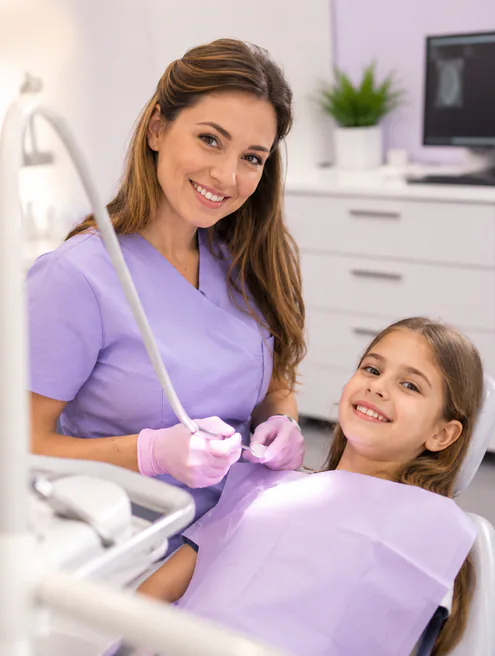
Your child's dental health is important to us. Schedule a consultation at Finch Midland Dental to discuss which pediatric dental services are right for your child.
Young child at the dentist learning to brush teeth
Restorative Options

Pediatric Crown Options

Dental crowns are a common treatment for children who have extensive tooth decay, trauma, or other dental issues. There are several types of dental crowns used in pediatric dentistry, each with its own unique benefits:

  • Stainless Steel Crowns: The most common type used in pediatric dentistry. They are durable, cost-effective, and can be placed in a single dental visit. Often used for back teeth and can last for several years.
  • Strip Crowns: Prefabricated crowns made from a thin layer of tooth-colored material. A good option for children who have mild to moderate tooth decay and need a temporary crown until a permanent restoration can be placed.
  • Composite Resin Crowns: Made from a tooth-colored resin material and a good option for children with small to medium-sized cavities. They are less durable than other types and may need to be replaced more frequently.
  • Porcelain Crowns: A popular choice for children who have front teeth that are damaged or have undergone significant dental work. Custom-made to match the child's natural tooth color and provide a durable and natural-looking restoration. Learn more about porcelain crowns.
  • Zirconia Crowns: A newer type of dental crown made from a strong ceramic material. A good option for children who have metal allergies or sensitivities, and popular for front teeth due to their natural-looking appearance.

If your child is in need of a pediatric dental crown, schedule a consultation today.

Key Benefits

Benefits of Pediatric Dental Care

Early dental care sets the foundation for a lifetime of healthy smiles:

Child-Friendly Environment

Our office is designed to make children feel comfortable and safe, with a gentle approach that builds positive associations with dental visits.

Early Detection

Regular pediatric exams catch cavities, alignment issues, and developmental concerns early — when treatment is simpler and less expensive.

Preventive Focus

Sealants, fluoride treatments, and hygiene education help prevent cavities before they start — keeping your child's teeth healthy from the beginning.

Growth Monitoring

Your dentist monitors jaw development, tooth eruption, and bite alignment as your child grows — identifying orthodontic needs early.

Builds Lifelong Habits

Positive early dental experiences and proper hygiene education establish habits that protect your child's oral health for life.

Give your child the best start for a healthy smile. Contact Finch Midland Dental to schedule your child's dental appointment today.
Step By Step

What to Expect at Your Child's First Visit

Your child's first dental visit at Finch Midland Dental is designed to be fun, gentle, and stress-free. Here is what happens:

  1. 1. Welcome and tour. We show your child around the office, introduce them to our team, and let them sit in the chair and explore at their own pace.
  2. 2. Medical history review. We review your child's health history, medications, and any concerns you have as a parent.
  3. 3. Gentle exam. our team counts your child's teeth, checks their gums and bite, and looks for any signs of decay or developmental issues — using age-appropriate language throughout.
  4. 4. Cleaning (if appropriate). For children who are comfortable, our hygienist performs a gentle cleaning and fluoride application. If your child isn't ready, that's perfectly fine — we'll try again at the next visit.
  5. 5. Parent consultation. our team reviews findings with you, discusses any recommended treatment, and answers all your questions about your child's oral development.
Common Concerns

Common Concerns About Pediatric Dentistry

Parents often share these concerns with us. our team addresses each one with care.

"My child is terrified of the dentist"

Dental anxiety in children is very common, and we are trained to work with it — not against it. We use a "tell-show-do" approach, move at your child's pace, and never force treatment. For children with significant anxiety, we offer sedation options including nitrous oxide ("laughing gas") to help them relax. Many of our most anxious patients end up looking forward to their visits.

"Why treat baby teeth if they're going to fall out anyway?"

Baby teeth hold space for permanent teeth and guide jaw development. A baby tooth lost prematurely to decay can cause neighboring teeth to shift, leading to crowding and alignment problems that may require orthodontic treatment later. Untreated cavities can also cause pain, infection, and difficulty eating — affecting your child's nutrition, sleep, and school performance.

"My toddler sucks their thumb — should I be worried?"

Thumb sucking is normal in infants and toddlers. Most children stop on their own between ages 2 and 4. If the habit continues past age 4 or when permanent teeth begin to erupt, it can affect the alignment of the teeth and the shape of the palate. our team can assess your child's bite development and recommend gentle strategies to help them stop when the time is right.

What to Know

Risks of Delaying Pediatric Dental Care

Children's dental problems can escalate quickly without regular professional monitoring.

  • Untreated cavities in baby teeth can spread to adjacent teeth and develop into painful abscesses requiring emergency treatment
  • Early loss of baby teeth without space maintainers can cause permanent teeth to erupt crooked, increasing the need for orthodontics
  • Dental infections in children can spread to the jaw, bloodstream, and surrounding tissues — in rare cases these become life-threatening
  • Children who associate dental visits with pain (from emergency treatment of advanced decay) are more likely to develop lifelong dental anxiety
Common Questions

Frequently Asked Questions About Pediatric Dentistry

The American Academy of Pediatric Dentistry recommends that a child's first dental visit should occur when the first tooth erupts or no later than their first birthday. However, many children do well starting around age 3, when they can better participate in the visit.

Dental sealants are a thin coating applied to the chewing surfaces of the back teeth to prevent cavities from forming in the deep grooves and pits. They protect teeth from decay by sealing out bacteria and food particles. Learn more about dental sealants.

Space maintainers are dental devices used to preserve the space created by a lost baby tooth until the permanent tooth is ready to erupt. They prevent other teeth from shifting into the space, which can cause crowding and bite problems.

The American Dental Association (ADA) recommends a dental cleaning every six months. Children with a higher risk of cavities may benefit from more frequent visits.

Yes. At our Scarborough dental office we offer pediatric dentistry to patients in Scarborough and the surrounding area. Contact our office today to schedule an appointment.

Yes. For children with dental anxiety or who need extensive treatment, we offer nitrous oxide ("laughing gas") sedation. This is a safe, mild sedative that helps children relax during their visit. The effects wear off within minutes after the appointment. our team will discuss whether sedation is appropriate for your child.

Most dental insurance plans cover preventive care for children, including exams, cleanings, X-rays, sealants, and fluoride treatments. We verify your child's benefits before the appointment and will let you know if any additional services have out-of-pocket costs.

That is completely okay and it happens more often than you might think. We never force a child to accept treatment. If your child is not ready for a full cleaning on the first visit, we may do a simple "tooth count" and chair ride instead — building trust gradually so the next visit goes more smoothly. The goal is always a positive experience, even if that means we accomplish less clinically on the first visit.

Medical Disclaimer

This content is for informational purposes only and does not constitute dental or medical advice, diagnosis, or treatment. Treatment recommendations for children vary based on age, development, and individual health needs. Sedation options carry their own risks and are discussed individually with each family. Consult our team or a qualified dental professional regarding any questions about your child's oral health. Individual results may vary.

Give Your Child a Healthy Smile for Life

Our pediatric dental team provides gentle, compassionate care for children of all ages. Schedule your child's visit today.