
|

Gum Disease Treatment

Restore your gum health

Finch Midland Dental in Scarborough treats gingivitis and periodontitis with scaling and root planing, targeted antibiotics, and ongoing periodontal maintenance — stopping gum disease before it leads to tooth loss. our team uses pocket depth measurement, bleeding index tracking, and digital x-rays to diagnose gum disease accurately and build a targeted treatment plan. Patients from Scarborough count on Finch Midland Dental for gentle, effective gum therapy. Schedule a periodontal evaluation or call (416) 297-6109.

What is Gum Disease treatment?

What is Gum Disease treatment?

Gum disease treatment typically involves several steps to control the infection, reduce inflammation, and prevent further damage to the gums and teeth. The first step is usually a professional dental cleaning, also known as scaling and root planing, to remove plaque and tartar from the teeth and below the gum line. Antibacterial medications may also be prescribed to control the infection. In more severe cases, surgery may be necessary to repair or regenerate damaged tissue, or to remove severely infected teeth. Maintaining good oral hygiene practices, such as regular brushing and flossing, and scheduling regular dental check-ups can also help prevent and manage gum disease. Your dentist or periodontist will determine the best course of treatment based on the severity of your gum disease and individual needs.

Transcript
can gum disease really cause me to have a heart attack my name is Whitney and I'm a dental hygienist here to talk about the oral systemic link and how your dental health directly relates to your overall health so let's talk by first answering the question can gum disease really cause a heart attack technically the answer is yes it can contribute to increasing your risk of having a heart attack this is because gum disease increases your risk of heart disease and heart disease leads to heart attacks it is a risk factor if your gums are unhealthy unhealthy gums can not only increase your risk of having a heart attack but additionally gum disease is related to a bunch of other conditions such as diabetes kidney disease Alzheimer's and more so why is this how does this work like we said your gums are directly related to your overall body's Health the oral systemic link your mouth is the gateway to your entire body if there's bad plaque bacteria stuck on your teeth sitting on top of your gums that plaque bacteria can travel all the way from the blood vessels in your gums all the way throughout your body it's all connected so now I'm gonna really sound like a true dental hygienist I'm gonna tell you about the importance of flossing but really the number one reason this bad bacteria often gets stuck on the gums is mostly due to not flossing or not leaning between your teeth with a water flosser or interdental brushes other reasons this black bacteria is sticking on your teeth can be due to poor brushing techniques in general not brushing correctly and or not visiting your dentist's office regularly for professional cleanings so whether it's from not flossing or not brushing or not getting professional cleanings when that bacteria is just left there over time that plaque bacteria will harden and it will turn into something we call Tartar and over time that tartar will start going below the gums and now this is no longer just bad bacteria but now it's bad bad bacteria when it turns into Tartar and Studies have proven and shown that this bad bad bacteria this stuff is directly related to all those conditions I just mentioned heart disease diabetes kidney disease Alzheimer's the connection between gum infections with medical conditions in your overall body is a thing so that's something to think about let it simmer let it digest in your mind think about it there's more to brushing and flossing than it just being an annoying task that you have to do every day there's more to it than just getting fresh breath and having the perfect smile keeping your gums healthy and your mouth healthy from brushing and flossing and removing that plaque bacteria it actually helps prevent serious health conditions and before we go one more thing I'll get off my gum health rant quickly to talk about the teeth we talked about the gums but what about an infected tooth a bombed out tooth that has a big cavity that keeps getting bigger and bigger let's quickly talk about how a tooth can also contribute to things such as a brain infection which in rare cases can cause death so again with the oral systemic link we all know about the gums now keeping that plaque and tartar Away by keeping them clean but with teeth of course you also want to brush and floss and get professional dental cleanings routinely to keep your teeth healthy in addition to limiting the amount of sugar you eat and rinsing with water throughout the day to lower the contact time that foods and drinks sit on your teeth to prevent cavities which in turn will help prevent tooth infections but if you have a tooth that ends up getting infected due to an untreated cavities say you put off scheduling a filling appointment for too long it can turn into a tooth infection so to avoid allow showing a small cavity to grow big enough to become infected and travel through your body if you need a cavity filled schedule your appointment now and then you're good however if you end up finding out that you have an infected tooth you are unable to prevent it from happening please know that having a tooth infection does not mean it will immediately travel to your brain no no no no if your tooth is infected if you end up getting an abscessed tooth the next step is to either get a root canal or get an extraction I do have a video that goes over the pros and cons of each procedure if you'd like to learn more but for the purpose of this video the point is if you have an infected tooth and you do not get it treated if you do not get the infection removed via either a root canal or an extraction over time this infection can grow and travel through your blood vessels again similar to the plaque bacteria under your gums now it's tooth decay bacteria and abscess that's under there and this bacterial infection can potentially travel to your cheeks and make them swollen or worst case scenario to your brain which we really do not want so in all visit your dental office routinely to monitor the health of your teeth and the health of your gums it's just like giving roots oil changes on your car getting routine Dental checkups and cleanings keeping everything stable it will not only set up your mouth to be healthy free of infections but it will also give you a much less chance of any Dental surprises you may have in the future I do have videos on how to prevent cavities which I'll link in the description box which will help you avoid getting any cavities leading to tooth infections as well as my how to prevent gum disease video which will help reduce your chances of plaque and tartar from sitting on your teeth for too long and reduce the chances of that bad bacteria from spreading throughout your body I hope this video helped you and I hope you know that this video was not meant to scare you if you skipped a year of going to the dentist and now you think you're going to die stop that that is not the point of this video the intention of this video is to just help educate and make you aware that over time yes gum disease and tooth infections can relate to those scary medical conditions but it doesn't happen overnight so don't freak yourself out just be aware and be preventative I'll link all of my related videos in the description box if you'd like to learn more please like subscribe and turn on your notifications if this video helped you and until next time I'll see you on Instagram at talk girl peace love and teeth [Music]

How does gum disease develop?

Gum disease develops when bacteria and plaque accumulate on and around the teeth and gums. When these substances are not removed through regular brushing and flossing, they can cause irritation and inflammation of the gums, leading to the early stages of gum disease, known as gingivitis. If left untreated, gingivitis can progress to more severe forms of gum disease, such as periodontitis, which can result in irreversible damage to the teeth and gums. Other factors that can contribute to the development of gum disease include smoking, hormonal changes, certain medications, and genetics. Regular dental check-ups and good oral hygiene habits are essential in preventing and managing gum disease.

How is gum disease linked to other health issues?

Gum Disease and Heart Attacks
Research has shown that gum disease is linked to other health problems such as heart attacks. When left untreated, the bacteria and inflammation associated with gum disease can enter the bloodstream and travel to other parts of the body, potentially contributing to a variety of health issues. For example, gum disease has been linked to an increased risk of heart disease, stroke, diabetes, respiratory infections, and pregnancy complications. While the exact mechanisms behind these connections are not yet fully understood, maintaining good oral hygiene and seeking treatment for gum disease can help reduce the risk of developing these and other health problems.

More Questions about Gum Disease?
Contact our office today to schedule a consultation with our dentist. We can answer any questions you have about gum disease treatment and address any issues unique to your specific situation.
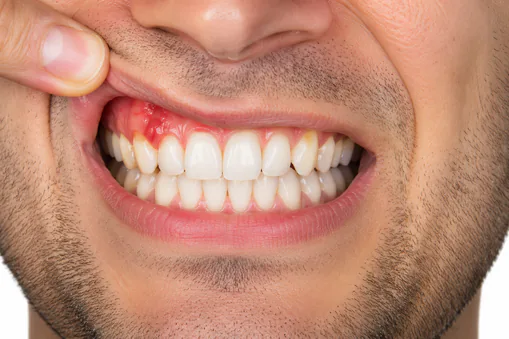
What are the symptoms or signs of gum disease?

What are the symptoms or signs of gum disease?

Common symptoms of gum disease include:

  • Red, swollen, or tender gums
  • Bleeding gums, especially during brushing or flossing
  • Receding gums or teeth that appear longer
  • Persistent bad breath or a bad taste in the mouth
  • Changes in the way your teeth fit together when you bite or chew
  • Loose or shifting teeth
  • Pus between the teeth and gums
  • Changes in the alignment of teeth or a change in the way partial dentures fit

It is important to note that some people with gum disease may not experience any symptoms, which is why regular dental check-ups with our Scarborough dentist are essential in detecting and managing the condition.

Our Clinical Approach

Gum disease is the leading cause of adult tooth loss — and most patients do not know they have it until it is advanced. At Finch Midland Dental, every patient is screened at every cleaning with pocket depth measurements and a bleeding check. Early intervention is everything.

Scaling and root planing is not just a 'deep cleaning' — it is a therapeutic procedure that removes bacterial biofilm and tartar from below the gumline, where regular cleanings cannot reach. Done properly, it can reverse early gum disease and stop further bone loss.

Reviewed by our team · Finch Midland Dental, Scarborough, ON

Transcript
i'm pretty good at typing this would be cute it might be its own little short it might be added to this video not sure but i'm ready did you film i don't know i'm gonna period chart myself well i'm not doing it but i'm recording the numbers i only have my fingers on the one two and three because i'm hoping there's no fours if there is you can tell me i won't be sad alright six two one two two one three two one one two one two two one two two one two two one two two one two two one two two one two three one two two one three three one two two two hold on i gotta get back there three three gun two two two one two two two two two one one one one two two one two two one two three two three three two three three one two two one two two one two two one two two one two one one two two one two three one two two one three three one sorry hurt three three two three three two three three two three three two three three two three three two guess our hair two two but that's what yeah one two two one two two one two two one two two one two two two three three two three three two three yay thank you so much that was fun peace love and peace [Music] you

How your dentist identifies periodontal disease

Visual exam
The dentist or dental hygienist will visually inspect your teeth and gums, looking for signs of redness, swelling, bleeding, or other signs of inflammation.

Pocket depth measurement
The dentist or dental hygienist will use a probe to measure the depth of the pockets between your teeth and gums. Deeper pockets may indicate the presence of gum disease.

X-rays
X-rays can help detect bone loss or other structural changes that may indicate gum disease.

Medical history
Your dental professional will ask about your medical history, including any medications you are taking or health conditions you have that may contribute to gum disease.

More Questions about Gum Disease?
Contact our office today to schedule a consultation. We can answer any question you have about gum disease and address any issues unique to your specific situation. We look forward to seeing you at Finch Midland Dental.

How is periodontal disease treated at our Scarborough dental office?

First, a thorough cleaning of the teeth and gums is performed to remove plaque and tartar build-up. Antibacterial medication may also be prescribed to control the infection. In more advanced cases, the dentist may perform scaling and root planing to remove plaque and tartar from below the gum line. In severe cases, surgery may be necessary to repair or regenerate damaged tissue, or to remove severely infected teeth. With proper treatment and ongoing oral care, gum disease can be managed, and the health of the gums and teeth can be restored. Contact us at Finch Midland Dental in Scarborough today.

Key Benefits

Why Choose This Treatment

Stops Disease Progression

Professional treatment halts the bacterial infection, preventing further destruction of gum tissue, bone, and the supporting structures around your teeth.

Reduces Bleeding and Inflammation

Once plaque and tartar are removed and infection is controlled, gum tissue heals, swelling subsides, and bleeding during brushing dramatically decreases.

Fresher Breath

The bacteria causing periodontal disease are a major source of persistent bad breath. Effective treatment eliminates these bacteria and significantly improves breath odor.

Protects Teeth from Loss

By preserving the bone and tissue that anchor your teeth, periodontal treatment is one of the most effective ways to prevent tooth loss in adults.

Improves Overall Health

Research links gum disease to heart disease, diabetes, and other systemic conditions. Treating periodontal disease may reduce your risk of these serious health complications.

Gum disease is highly treatable when caught early. your dentist and the team at Finch Midland Dental provide gentle, thorough periodontal care to restore your gum health and protect your smile for the long term.
Is This Right For You

Is Gum Disease Treatment Right for You?

Gum Disease Treatment is a good fit if you are:

  • Bleeding gums when brushing or flossing
  • Persistent bad breath
  • Red, swollen, or receding gums
  • Loose teeth or changes in bite
  • Pocket depths of 4mm or more

This may not be the right option if:

  • Patients with healthy gums (routine cleanings only needed)
  • Patients unwilling to improve home care (treatment will fail without commitment)
Step By Step

What to Expect During Your Gum Disease Treatment Visit

Here is exactly what happens at your appointment at Finch Midland Dental. Knowing each step makes the experience far less intimidating — and lets you relax knowing what comes next.

  1. 1. Evaluation. our team measures pocket depths around every tooth and records bleeding points. X-rays check for bone loss. This baseline guides treatment.
  2. 2. Numbing. Local anesthetic is applied to the area being treated. You stay comfortable throughout — no pain, just pressure.
  3. 3. Scaling and root planing. Specialized instruments remove bacterial biofilm and tartar from below the gumline, and smooth the root surface so gums can re-attach. Done one quadrant at a time in most cases.
  4. 4. Healing. Over the following weeks, the inflammation resolves, pockets shrink, and gums tighten around teeth. Regular periodontal maintenance (every 3–4 months) keeps disease in check.
Common Concerns

Common Concerns About Gum Disease Treatment

These are the questions patients at Finch Midland Dental ask most often before committing to treatment. our team addresses each one honestly at your consultation.

"I brush regularly — I can't have gum disease"

Brushing helps, but flossing and professional cleanings reach places a brush can't. Gum disease is the most common chronic dental condition in adults — many patients have it without knowing.

"Treatment sounds painful"

Scaling and root planing is performed under local anesthesia — you feel pressure but not pain. Most patients report it's far less uncomfortable than they expected.

"Can I just skip it and hope it goes away?"

Gum disease doesn't self-heal. Left untreated, it progresses to bone loss and tooth loss. The earlier you address it, the simpler and less expensive treatment is.

What to Know

Risks and Considerations of Gum Disease Treatment

Every procedure has tradeoffs, and transparent conversation about them is part of informed consent. our team reviews these at your consultation and answers every question before treatment begins.

  • Temporary gum sensitivity during healing
  • Mild bleeding in the first days after scaling
  • Advanced cases may require surgical intervention
  • Disease can recur without proper maintenance and home care
Common Questions

Frequently Asked Questions About Gum Disease Treatment

Technically, periodontal disease is not contagious. However, the bacteria that causes the inflammation is contagious and can be transmitted through saliva. If you have gum disease, you should avoid sharing eating utensils.

Practicing good oral hygiene habits such as brushing twice a day, flossing daily, and visiting the dentist regularly for cleanings can help prevent periodontal disease.

While genetics may play a role in periodontal disease, environmental factors such as poor oral hygiene and smoking are more significant factors in its development.

Early-stage periodontal disease can be reversed through improved oral hygiene habits, regular professional cleanings, and a healthy diet. However, advanced cases of periodontal disease may require more extensive treatment.

Yes. At our Scarborough dental office we offer gum disease treatment to patients in Scarborough and the surrounding area. Contact our office today to schedule an appointment.

Common signs include bleeding gums when brushing or flossing, red or swollen gums, persistent bad breath, receding gums, loose teeth, and gum tenderness. Many patients have no symptoms in early stages, which is why regular checkups are critical.

Gingivitis (early gum disease) is reversible with proper cleaning and improved home care. Periodontitis (advanced gum disease) cannot be fully cured but can be stopped and controlled with scaling, root planing, and ongoing periodontal maintenance.

Most dental insurance plans cover scaling and root planing at 80%, and periodontal maintenance at 100%. We verify your benefits before treatment and provide a clear cost estimate for any out-of-pocket portion.

Medical Disclaimer

This content is for informational purposes only and does not constitute dental or medical advice, diagnosis, or treatment. Gum disease treatment carries minimal risk when performed properly. Temporary gum sensitivity and mild bleeding during healing are normal. Advanced cases may require surgical intervention if non-surgical therapy doesn't resolve pockets. Consult our team or a qualified dental professional regarding any questions about your oral health. Individual results may vary.

Learn More About Gum Disease Treatment

Contact our office to discuss how this treatment can help you achieve your dental health goals.